
Diatom Impact Donate Sanitary Towels to Female Inmates Nationwide

From left: Dr. Akindele Akintoye; CG NCS, Mr Sylvester Nwakuche (MFR) and Dr Benjamin Olowojebutu.
When we talk about menstrual health, we often picture schoolgirls, market traders, or corporate workers. But there is a group of women who menstruate every month and are rarely mentioned in public health conversations: female inmates.
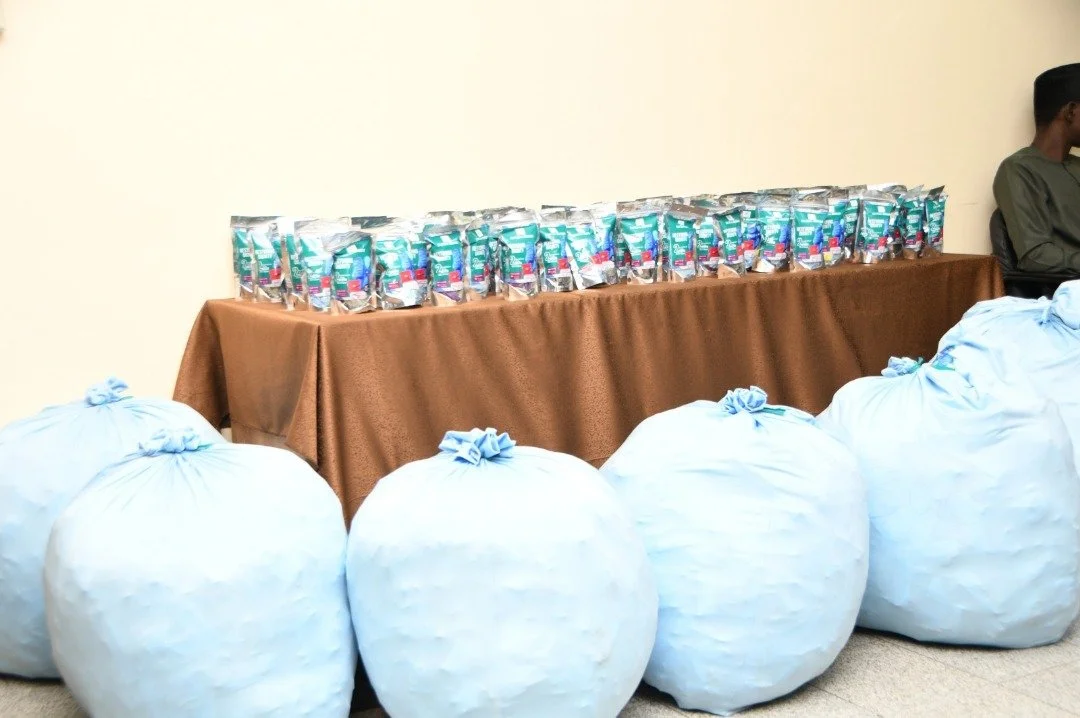
In October 2025, the Nigerian Medical Association (NMA), in partnership with the Diatom Impact Foundation, launched a nationwide menstrual health intervention by donating sanitary towels to all female inmates across Nigeria’s correctional centres.
The idea for this intervention began when a Senate investigative panel on the Nigerian Correctional Service raised alarms about poor menstrual hygiene among female inmates, describing it as a serious and worrying concern
In response, the NMA took up the challenge and, through advocacy and partnership, worked with Diatom Impact Foundation, founded by Dr. Akintoye Akindele, to supply sanitary towels to all female inmates in Nigerian correctional facilities nationwide
At the presentation held at the NCoS National Headquarters in Abuja:
NMA President Dr. Bala M. Audu was represented by First Vice President Dr. Benjamin Oluwatosin Olowojebutu.
The delegation was received by the Controller-General of the Nigerian Correctional Service, Sylvester Nwakuche (MFR, mni) and his team.
Sanitary towels as tools for public health and human rights
For women in custody, access to sanitary pads and proper menstrual hygiene management (MHM) is a basic health requirement. Without menstrual products, many resort to unsafe alternatives, increasing the risks of infections, discomfort and psychological distress. Global agencies such as UNFPA and UN Women emphasise that menstrual health is a human rights, public health, and gender equality issue.
By ensuring a consistent supply of sanitary towels in Nigerian correctional facilities, NMA and Diatom Impact are:
Supporting infection prevention and sexual and reproductive health (SRH)
Upholding dignity, self-esteem and mental wellbeing for female inmates
Aligning correctional care with Sustainable Development Goals (SDGs), particularly SDG 3 (Good Health and Well-Being) and SDG 5 (Gender Equality)
Integrating Mental Health into Correctional Health Services
Monthly psychiatric evaluations and mental health support
The partnership goes beyond a one-off sanitary towel donation. During the Abuja visit, NMA also announced that, in collaboration with Diatom Impact, it would deploy mental health personnel and psychiatrists to correctional centres nationwide, starting monthly psychiatric evaluations for inmates from November 2025.
This approach acknowledges the intersection of:
Menstrual health
Mental health
Rehabilitation and reintegration
Incarcerated women often carry heavy burdens of trauma, stigma and anxiety. A lack of menstrual hygiene products can deepen feelings of shame and invisibility. Providing menstrual hygiene management and structured mental health services helps reposition prisons as genuine centres of learning, healing, and reform, echoing the vision expressed by the NCoS leadership.
Diatom Impact’s Broader Commitment to Gender Equality and Menstrual Health
The sanitary towels donation to female inmates builds on Diatom Impact’s track record of tackling period poverty in vulnerable communities.
In 2022, Diatom Impact donated about 10,000 packs of NAFDAC-approved reusable sanitary pads valued at ₦15 million to girls in Lagos through the Sanitary Pad Media Campaign (SPMC), a project designed to alleviate period poverty among vulnerable schoolgirls in low-income communities.
These interventions support Diatom Impact’s five core pillars: Education, Health, Entrepreneurship, Gender Equality, and Quality of Life, which collectively aim to improve lives across African communities.
Why Menstrual Health in Prisons Matters for Nigeria’s Development
Understanding period poverty in Nigeria
Nigeria faces a significant period poverty crisis. Millions of women and girls struggle to afford basic menstrual hygiene products such as sanitary pads, underwear and pain relief, often resorting to unsafe alternatives.
Female inmates are at the sharpest edge of this crisis because they:
Have limited or no income
Depend almost entirely on institutional provision and donations
Are largely invisible in mainstream policy conversations and public sympathy
By focusing on menstrual hygiene management in correctional centres, NMA and Diatom Impact are shining a light on a group that sits at the intersection of gender, poverty, and justice.
How Organisations and Partners Can Build on This Work
1. Embed menstrual health into CSR and ESG strategies
Corporate organisations, philanthropists and development partners can:
Include menstrual health projects in annual CSR plans
Prioritise menstrual hygiene management in prisons, schools, and low-income communities
Use ESG frameworks to report progress on gender and health-related interventions
2. Partner with Us
New partners can collaborate with:
Nigerian Medical Association (NMA) on clinical and mental health components
Diatom Impact Foundation on programme design, impact measurement and implementation
Nigerian Correctional Service for operational access and sustainable integration into prison health systems
3. Invest in systems, not just one-off donations
To truly shift the landscape of correctional health and menstrual hygiene in Nigeria, stakeholders should:
Advocate for dedicated menstrual health budget lines in correctional facilities
Support regular mental health services, including counselling and psychiatric care
Train staff in gender-sensitive, rights-based correctional care
Menstrual health should not stop at prison walls. By combining sanitary towel donations, mental health support, and long-term partnerships, NMA and Diatom Impact are proving that it is possible to restore dignity, protect health, and support rehabilitation for women behind bars.
If your organisation is committed to gender equality, public health, or impact investing, this is an opportunity to act.
